
Cinnamon is a spice that comes from the bark of an evergreen tree of the Lauraceae family. There are two types of cinnamon available, each having its own flavor profile and health benefits. The cinnamon most commonly found in U.S. kitchens is called Cassia. Cassia tree cinnamon is produced in Indonesia, Vietnam, China, and Burma and is most commonly regarded as being dark in color and bold in taste. The “TRUE” cinnamon is called Ceylon cinnamon and is native to the South Asia region. This more expensive cinnamon is produced commercially in Sri Lanka, Brazil, India, and the Caribbean. Ceylon cinnamon is lighter in color, softer in texture, and milder in taste. Ceylon cinnamon is more commonly used in the United Kingdom and recipes originating from that area are crafted with the lighter tasting cinnamon in mind. In antiquity, Cinnamon and cassia were both an expensive and highly desired multi-purpose spice in powdered, quilled (stick), or oil forms.
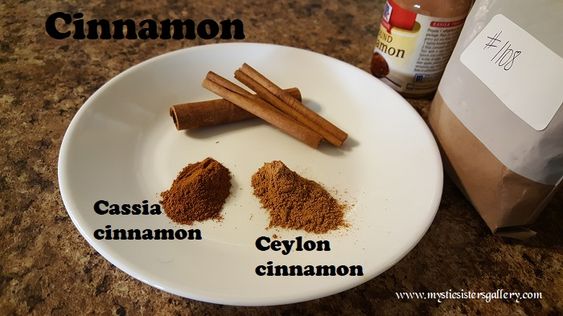
In modern times, Cinnamon is one of the most common spices in a typical kitchen. The smell of cinnamon reminds me of the kitchens of my childhood; baked apples in the oven, homemade cinnamon buns or coffee cake, or the simple cinnamon sugar toast that mom would give me when I was feeling sick. The boldness of the spice is often associated with the aromas of the fall and winter season. Recipes such as pumpkin pie, fruited bread, and cookies all include at least a dash of cinnamon. Even savory squash recipes and thick soups commonly include a sprinkle of cinnamon to enhance the flavor. While cinnamon has a pleasing aroma, it is regarded as a Sun food ingredient and is used in recipes prepared to celebrate the Sun and the fire element. A simple Chia tea recipe is my preferred cinnamon beverage, but I am happy just adding a cinnamon stick to my hot coffee for that extrasensory experience.
The thick aromatic scent of cinnamon is commonly used in magickal workings in the form of incense. When mixed with powdered sandalwood it can be appropriate for any religious or spiritual magick; combining the high vibrational energy, the healing aspects, and the protective powers inherent in each. Cinnamon is useful for any magick or spellcraft in dealing with, “Spirituality, Success, Healing, Power, Psychic Powers, Lust, Protection, Love”. (Cunningham, 83) Cinnamon can be added to any other incense to help increase its powers, and it lends a sweet familiar scent to sachet type crafts.
Cinnamon essential oil is the third form of cinnamon that can be used, and it is obtained from the bark or the leaves. When it is made by steam distillation, cinnamon is high in cinnamaldehyde and has been shown to have antimicrobial properties. Cinnamon oil was used during the Egyptian mummification practices and as an anointing oil for holy occasions throughout the ancient world.
In modern times, cinnamon has been used to combat spoiling meats, aid in digestion and to help cure fungal issues. Cinnamon is considered an aphrodisiac and is found in many love spells, specifically to heighten a woman’s attraction to a man. Medical research is ongoing to prove or disprove that cinnamon can help combat the effects of diabetes and reliably aid in the regeneration of cells.
While cinnamon is a popular spice, it is not without its risks and safety precautions. Cassia cinnamon, our most popular, least expensive, and most readily accessible ground cinnamon can be toxic, damaging the liver and kidneys when too much is consumed due to a high amount of coumarin. Alternately, Ceylon cinnamon has a very low amount of coumarin. Cinnamon oil is considered a skin irritant, the bark oil being more irritating than the leaf, and should always be diluted using a host oil. All applications should begin with a test patch of skin, prior to any aromatherapy massage. In addition, cinnamon oil is considered a mucous membrane irritant and is never recommended for baths.
I wish that I had known about the irritating properties of cinnamon oil years ago. My mother had a bottle of the essential oil on a shelf near her besom; she used it to freshen up the fragrance from time to time. I loved the smell so much that I decided to use a little as perfume before going out on a blind date. I dabbed a little behind each ear, and off I went out the door. The poor fella had to wait as I ran back in the house and tried to scrub the oil off my skin, and then pretend not to notice the two huge red blotches on my neck from the irritant! Cinnamon remains one of my favorite spices for edibles, but I think I will limit my experimentation to trying it in some of my incense combinations.
Resources:
Cunningham’s Encyclopedia of Magical Herbs –Scott Cunningham (Llewellyn Publications, 2014) pp. 83 and 225.
How Stuff Works – How Cinnamon Works – Diana Bocco – http://science.howstuffworks.com/life/botany/cinnamon.htm
NAHA – National Association for Holistic Aromatherapy – Explore Aromatherapy – Safety – Author Unknown – http://www.naha.org/explore-aromatherapy/safety/
Magical Herbalism: The Secret Craft of the Wise – Scott Cunningham (Llewellyn Publications, 2013) pp. 106 and 109.
Magical Recipes Online – Herb Analysis: Cinnamon, the Herbal Fire – Olympia Poseidon http://www.magicalrecipesonline.com/2012/05/herb-analysis-cinnamon-herbal-fire.html
Oriental Journal of Chemistry: An International Journal of Pure and Applied Chemistry – Extraction of Essential Oil from Cinnamon (Cinnamomum Zeylanicum) – Wong Y. C, Ahmad-Mudzaqqir M. Y, Wan-Nurdiyana W.A. – http://www.orientjchem.org/vol30no1/extraction-of-essential-oil-from-cinnamon-cinnamomum-zeylanicum/
Sacred Earth: Ethnobotany and Ecotravel – Plant Profile Cinnamon – Kat Morgenstern – http://www.sacredearth.com/ethnobotany/plantprofiles/cinnamon.php
Witchipedia: Kitchen Witch Corner – Practical Kitchen Witchery for the Magical Homemaker – Planetary Correspondences – Author Unknown – http://www.kitchenwitchcorner.com/planetary-correspondences
 Mystic Sisters Gallery
Leave a comment